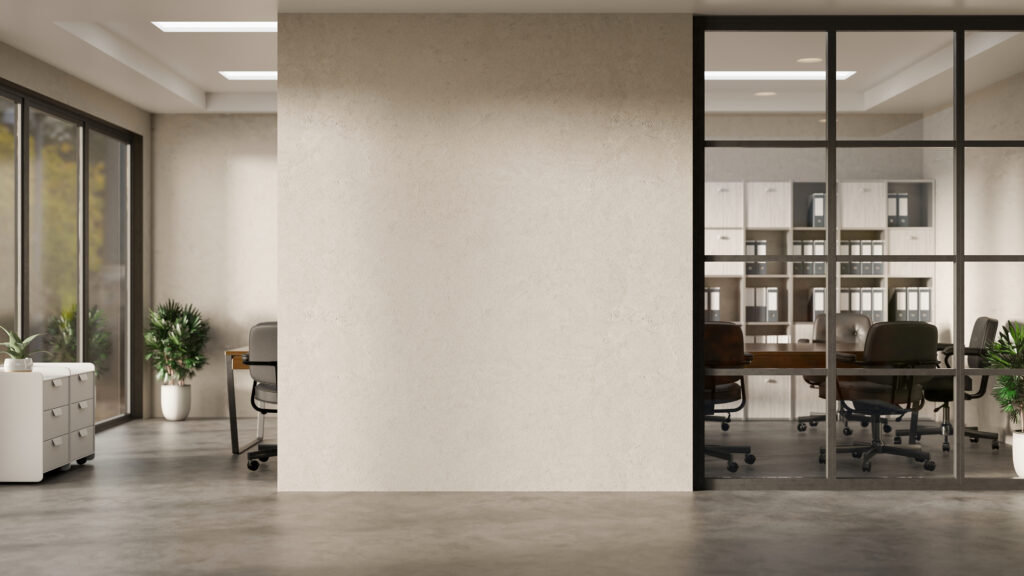
Educational environments need considerably more durable partitions than those used in many standard commercial interiors. Schools, colleges, nurseries, training centres and community education spaces are high-use buildings. Rooms are occupied throughout the day, furniture is moved regularly, pupils and staff pass through shared areas constantly, and spaces often need to adapt for lessons, assemblies, clubs, examinations and events.
A partition in an educational setting is not just a way to divide a room. It needs to cope with frequent handling, everyday knocks, noise, cleaning routines and long-term operational demands. In many cases, it also needs to support safeguarding, supervision, acoustic comfort and flexible timetabling.
The right level of durability depends on the age group, room use, traffic level and whether the partition is fixed, folding, sliding or movable. A partition in a quiet sixth form study area will face different demands from one in a primary school hall or a busy community classroom. However, the principle remains the same: partitions in education spaces should be specified for real daily use, not occasional light-duty use.
Why Does Durability Matter So Much in Schools and Colleges?
Educational buildings work hard. A classroom may be used by several groups in one day. A school hall may host PE, assemblies, lunch service, after-school clubs, parent events and community activities. Corridors are busy at lesson changeover, and shared rooms are often rearranged quickly between uses.
In this environment, weak or poorly specified partitions can quickly become a problem. Damage to panels, tracks, seals, handles or edges can affect appearance, safety, usability and acoustic performance. If a partition becomes difficult to operate, staff may stop using it properly, which means the space no longer functions as intended.
Durability also affects value over time. A cheaper, lighter-duty system may look appealing at the point of purchase, but if it needs frequent repairs or early replacement, it may not be the most cost-effective option. In education settings, the best partition is usually one that can withstand regular use while still being safe, practical and easy for authorised staff to operate.
What Kind of Wear and Tear Should School Partitions Withstand?
School partitions need to cope with a mixture of predictable and unpredictable use. Some wear comes from normal handling, such as opening and closing the partition. Other wear comes from the surrounding environment, including chairs, tables, bags, sports equipment, cleaning equipment and general movement through the building.
A durable partition in an educational environment should usually be able to withstand repeated operation, occasional impact, frequent cleaning and close contact with furniture. It should also maintain alignment and stability over time.
In practical terms, this means considering panel strength, edge protection, track quality, seals, ironmongery, operating mechanisms and finish. A partition may fail not because the main panel is weak, but because the details are not suitable for heavy use. Handles, locking mechanisms, track components and junctions all need to be robust enough for the setting.
This is particularly important where partitions are installed in halls, dining areas, drama rooms, music spaces or rooms used by multiple groups across the day.
Which Educational Spaces Need the Most Durable Partitions?
Not every room in a school has the same requirements. Some areas demand higher durability because they are used more frequently or more intensively.
School halls, assembly spaces and multi-purpose rooms usually need particularly robust partitions. These areas are often used for large groups, physical activity, lunch service, performances and community events. A partition in this setting may need to be moved regularly and must tolerate a busy surrounding environment.
Classrooms also need durable partitioning, especially where spaces are reconfigured for group work, interventions or changing class sizes. In primary schools, the level of everyday contact may be higher because pupils are younger and rooms are more activity-based. In secondary schools and colleges, durability may be driven by heavy timetable use and high occupancy.
Specialist teaching areas may also need careful specification. Music rooms, drama studios, sports areas, food technology rooms and practical learning spaces may require stronger finishes, better acoustic separation or more resilient surfaces than general teaching rooms.
In reception areas, offices and staff rooms, visual quality may be more important, but durability should still not be overlooked. These areas often experience frequent footfall and need to remain presentable.
How Durable Should Movable Partitions Be?
Movable partitions in educational environments should be specified for regular, controlled operation. In many schools, movable walls are used to divide halls, classrooms, training spaces or shared teaching areas. Their value comes from flexibility, but that flexibility depends on the system remaining easy and safe to use.
A durable movable partition should have a reliable track system, stable panels, strong seals and a suitable operating mechanism. It should not feel flimsy, awkward or unpredictable. Staff should be able to open and close it safely according to the system’s intended use, and the panels should stack or park neatly without obstructing circulation.
Because movable partitions include more operating components than a fixed wall, the quality of installation is especially important. Even a well-made system can perform poorly if it is not properly installed, aligned and adjusted. In schools, where downtime can disrupt timetables, reliable operation matters.
Movable systems are especially useful where schools need flexible teaching spaces or halls that can change size throughout the week. However, durability should always be matched to frequency of use. A partition used once a month for occasional events does not face the same demands as one opened and closed several times a day.
Are Folding Partitions Durable Enough for Schools?
Folding partitions can be suitable for educational environments when the system is designed for the level of use expected. They are often used in classrooms, halls, nurseries, community learning spaces and multi-use rooms where a quick, simple division is needed.
A good folding partition can be practical because it is relatively straightforward to open and close. This can help staff adapt rooms efficiently between lessons or activities. However, not all folding partitions are the same. Some are designed for lighter use, while others are built for more demanding commercial and educational settings.
For a school or college, it is important to consider how often the partition will be moved, who will operate it, how exposed it will be to pupils, and whether acoustic performance is needed. A folding partition in a low-use staff training room may not need the same level of resilience as one in a busy primary school hall.
Durability also depends on the surrounding layout. If furniture is frequently pushed against the partition, if pupils queue nearby, or if sports equipment is used in the same room, a more robust specification may be required.
How Important Are Acoustics in Educational Partitions?
Acoustic performance is a key consideration in educational environments. Partitions do not only need to be physically durable; they also need to support the way pupils and teachers use the space. A partition that divides a room visually but allows too much sound transfer may not be suitable for teaching.
Classrooms need conditions where speech can be heard clearly and where noise from adjoining spaces does not cause unnecessary disturbance. The Department for Education’s Building Bulletin 93 provides acoustic performance standards for schools and supports responsible bodies in meeting their duties under school premises and building regulations guidance.
This means acoustic performance should be considered early, especially for classrooms, music rooms, SEN spaces, halls, exam areas and rooms used for simultaneous teaching. If two classes are separated by a partition but both need to concentrate, sound reduction becomes a practical requirement, not a luxury.
It is also important to remember that acoustic performance depends on the full room, not just the partition panel. Doors, seals, ceilings, floors and surrounding construction all affect the result. A robust acoustic partition should therefore be part of a properly considered space design.
Do Partitions Need to Support Safeguarding and Supervision?
In education settings, partitions may also influence visibility and supervision. Some spaces need privacy, while others benefit from clear sightlines. The right approach depends on the age of pupils, the room use and the school’s safeguarding procedures.
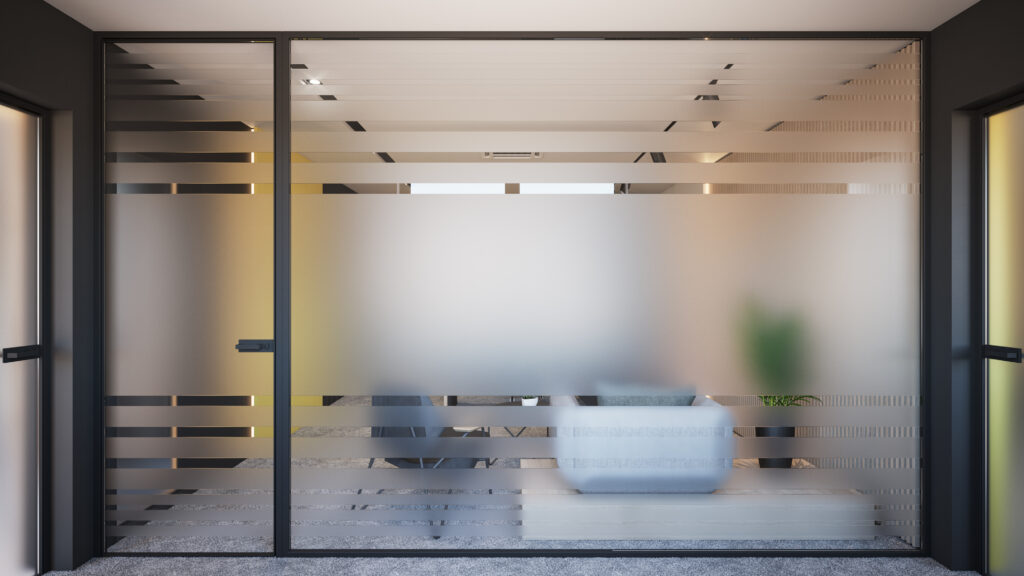
Glazed sections can be useful in corridors, intervention rooms, offices or shared learning spaces where visibility is important. Frosted or partially glazed panels may provide a balance between supervision and privacy. Solid partitions may be more appropriate for spaces where distraction needs to be reduced or where activities require enclosure.
Durability is still relevant here. Glazed partitions should use appropriate safety glass and suitable manifestation where needed. Solid panels should resist damage and remain secure. Any opening or moving system should be operated safely and should not create trapping or obstruction risks when used correctly.
The goal is to create spaces that feel safe, usable and appropriate for the activities taking place.
What Finishes Are Suitable for Educational Environments?
Partition finishes in schools and colleges need to balance appearance with resilience. A finish may look good at installation, but if it marks easily, chips quickly or cannot be cleaned effectively, it may not be suitable for education use.
Durable finishes should be chosen with the room’s daily activity in mind. In a school hall, the finish may need to cope with furniture movement, high traffic and occasional impact. In a classroom, it may need to withstand everyday contact, displays, cleaning and changes in layout. In a reception area, appearance and brand presentation may be more important, but the surface must still be practical.
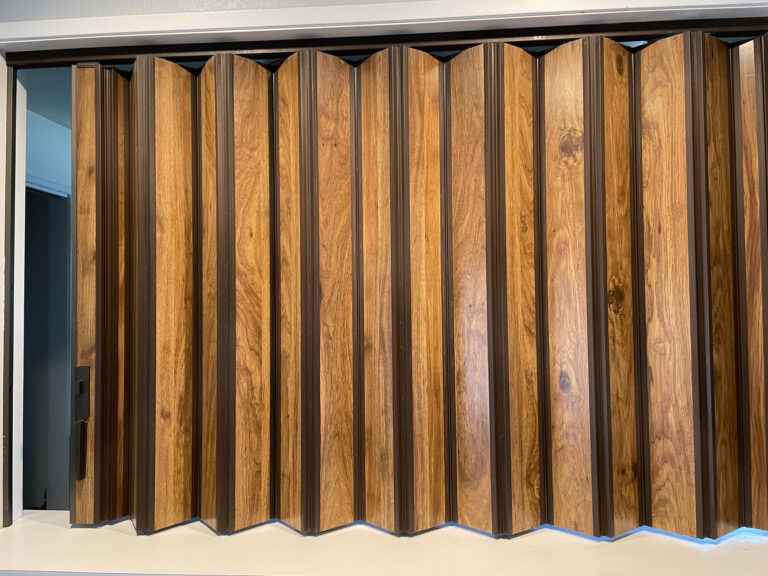
Timber and timber-effect finishes can work well where a warmer, more natural look is desired. Wooden partition systems may be suitable for halls, community areas, learning spaces or interiors where the school wants a softer visual feel than plain commercial panels.
However, any finish should be selected for its intended environment. A high-quality finish in the wrong location can still underperform if it is exposed to heavier use than it was designed for.
Should Schools Choose Fixed, Sliding or Movable Partitions?
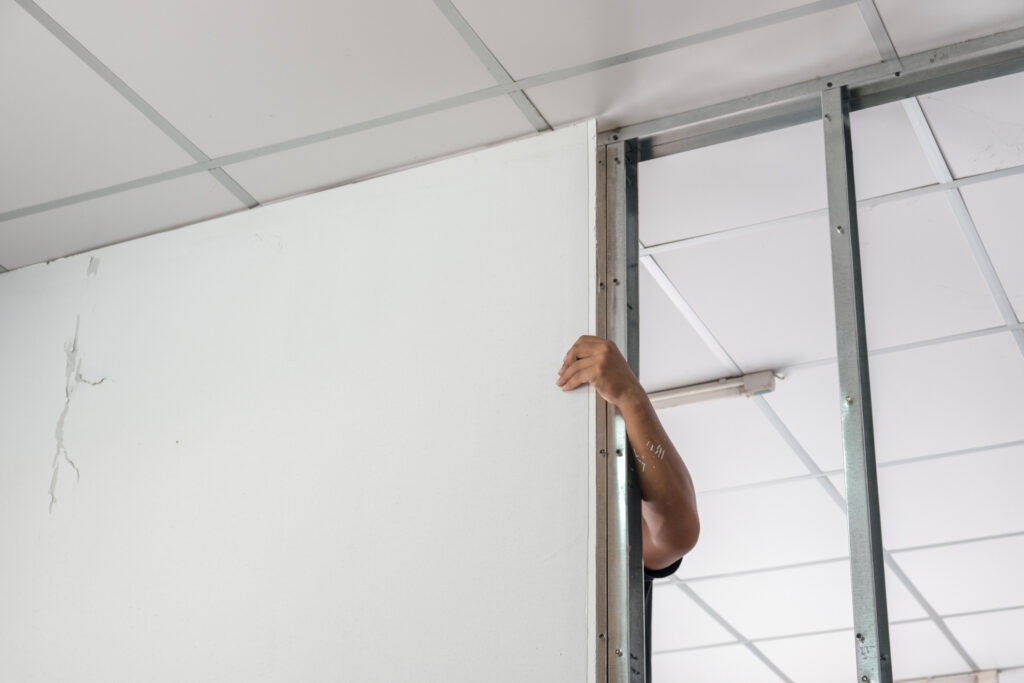
The best partition type depends on how often the space needs to change. Fixed partitions are generally suitable when a room layout is permanent. They can provide strong separation for offices, store rooms, staff areas and dedicated classrooms.
Sliding partitions may be useful where space is limited and the school needs a division that can move neatly aside. They can help create flexible teaching areas or divide shared spaces without requiring large swing zones.
Movable and folding partitions are often best where rooms need to change regularly. This is common in halls, assembly spaces, dining areas, training rooms and larger classrooms. They allow schools to make better use of floor space without committing every room to one permanent function.
For example, a hall might be divided into two teaching or activity areas during the day, then opened fully for assembly or an evening event. A shared classroom could be divided for small-group work, then opened up for collaborative projects.
For projects involving adaptable learning spaces, domestic partition walls may provide useful design context for smaller spaces, while larger educational settings will usually require commercial-grade specification and professional installation.
How Often Should Educational Partitions Be Maintained?
The more frequently a partition is used, the more important maintenance becomes. Even durable systems need periodic checks to keep them operating safely and smoothly.
Maintenance may include checking tracks, seals, hinges, locking mechanisms, panel alignment, handles and surface condition. Staff should also be clear on correct operation, particularly with movable or folding systems. Misuse can shorten the life of a partition and may create avoidable safety issues.
In schools, it is sensible to include partitions within routine facilities checks. If a system becomes stiff, noisy, misaligned or difficult to close, it should be inspected rather than forced. Small issues are often easier to resolve early than after damage has worsened.
Regular maintenance helps protect the investment and reduces the chance of disruption during the school day.
What Should Be Considered Before Installation?
Before installing partitions in an educational environment, schools should consider how the space is used now and how it may need to change in the future. A partition should support teaching, movement and supervision rather than simply divide the room.
Important considerations include room size, pupil age, frequency of use, acoustic requirements, staff operation, fire strategy, accessibility, finishes, cleaning routines and storage or stacking space. It is also important to think about whether the partition will be near doors, circulation routes, furniture, sports equipment or dining arrangements.
For larger education projects, early discussion with designers, contractors and facilities teams can help avoid practical issues later. A partition may need to coordinate with lighting, heating, ventilation, ceilings, flooring and other building services.
Good specification at the start can prevent problems that would otherwise affect daily use.
Frequently Asked Questions
Do school partitions need to be stronger than office partitions?
In many cases, yes. Schools and colleges often have higher footfall, more frequent room changes and greater exposure to everyday impact. Educational partitions should be specified for the level of use expected in that environment.
Are acoustic partitions necessary in classrooms?
Acoustic partitions are often important where teaching takes place on both sides of the partition. They help reduce disruption and support clearer communication, especially in classrooms, music rooms, SEN spaces and exam areas.
Can movable partitions be used in school halls?
Yes, movable partitions can be very useful in school halls because they allow one large space to become smaller activity, teaching or meeting areas. The system should be durable, safely operated and suitable for the frequency of use.
Final Thoughts
Partitions in educational environments need to be durable enough to cope with daily use, repeated movement, busy rooms and long-term wear. They should also support acoustics, safety, supervision, cleaning and flexible teaching.
The right level of durability depends on the room. A school hall, classroom, SEN space, office and training room will each place different demands on the partition system. For the best results, schools should choose partitions based on real use, not simply appearance or initial cost.
A well-specified partition can help schools make better use of space, reduce disruption and adapt rooms for changing needs over time.
For advice on durable partition systems for schools, colleges and educational environments, contact A-Door Additions to discuss your project.
Phone: 01373 454577
Email: info@a-dooradditions.co.uk
Find out more: https://buildingadditions.co.uk/