Movable partition systems are designed to make spaces more flexible, but they still need proper care to keep them safe, smooth and reliable. Whether used in an office, school, community hall, clinic, hotel or conference venue, a movable wall is a working system with panels, tracks, seals, mechanisms and contact points that all need to remain in good condition.
The maintenance required for movable partition systems usually includes routine visual checks, safe operation checks, cleaning, inspection of tracks and panels, seal checks, adjustment where needed and periodic professional servicing. The exact maintenance routine will depend on the system type, how often it is used and the environment it is installed in.
A movable partition may look like a wall when closed, but it should be treated more like building equipment. If it is used regularly, it needs to be maintained so it continues to operate correctly and does not become difficult, noisy, misaligned or unsafe.
Why Do Movable Partition Systems Need Maintenance?
Movable partition systems are often installed in spaces where flexibility is important. They may be opened and closed daily in a school hall, adjusted weekly in a community venue, or used occasionally in a meeting suite. Every time the system is moved, the panels, track, seals and operating mechanism are placed under normal working load.
Over time, small issues can develop. A panel may stop aligning as neatly as it once did. A seal may become worn. A track may collect dust or debris. A locking mechanism may become stiff. If these issues are ignored, the partition may become harder to operate and could eventually need more significant repair.
Maintenance helps prevent this. It keeps the system working as intended, protects acoustic performance, reduces disruption and extends the useful life of the installation.
In commercial and public buildings, there is also a safety dimension. The Health and Safety Executive’s guidance on maintenance of work equipment states that the Provision and Use of Work Equipment Regulations require work equipment to be maintained in an efficient state, in efficient order and in good repair, and that maintenance operations can be carried out safely.
While the exact responsibilities will depend on the setting and equipment, the principle is clear: equipment used in workplaces should not be left to deteriorate until it fails.
What Parts of a Movable Partition Need Checking?
A movable partition system is made up of several working parts. Maintenance should look at the full system rather than just the visible panel faces.
The main areas to check include:
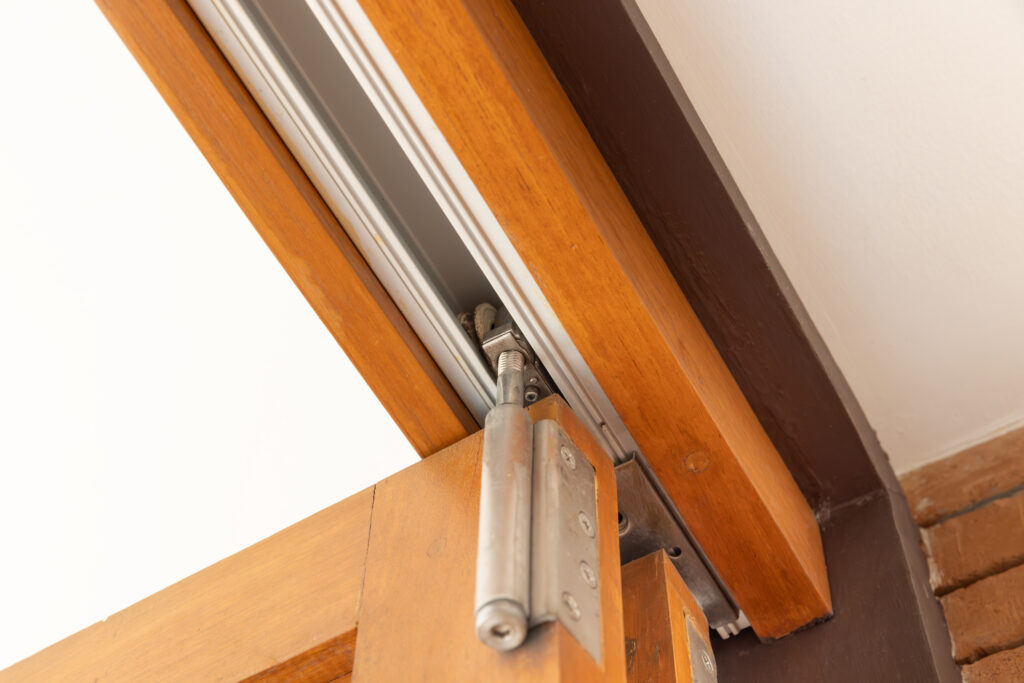
- Overhead tracks, guides and running components
- Panel faces, edges and joints
- Top, bottom and side seals
- Hinges, carriers, rollers or suspension points
- Handles, locks and operating mechanisms
- Stacking or parking areas
- Floor contact points and surrounding finishes
- Wall junctions and closing posts
Each part contributes to how the partition works. If the track is obstructed, the panels may not move smoothly. If seals are damaged, acoustic performance may reduce. If handles or locks become stiff, staff may force the system and cause further wear.
A movable partition should operate smoothly, close securely and sit correctly in its intended position. Any change in operation should be treated as a sign that a check is needed.
How Often Should Movable Partitions Be Inspected?
The right inspection frequency depends on how often the partition is used and the type of environment. A movable wall in a busy school or conference venue may need more frequent checks than a system in a boardroom used occasionally.
As a practical starting point, users or facilities teams should carry out basic visual checks regularly, especially in high-use spaces. More detailed professional servicing should be scheduled according to the manufacturer’s guidance, installation details and the level of use.
In a school hall, community venue or commercial setting, it is sensible to include movable partitions in routine facilities checks. If the system is used daily, staff should be alert to signs of stiffness, uneven movement, damaged seals or unusual noise.
The HSE’s guidance on inspection of work equipment explains that inspection is required in certain circumstances to ensure health and safety conditions are maintained, and that the extent of inspection depends on the type of equipment, where and how it is used, and the risk involved.
This supports a practical, risk-based approach. A lightly used partition in a low-risk meeting room will not need the same level of attention as a heavily used system in a busy public building.
What Routine Checks Can Staff Carry Out?
Staff responsible for the space can usually carry out simple checks without dismantling or adjusting the system. These checks are not a replacement for professional servicing, but they can help spot problems early.
A basic routine check might include looking for obvious damage, checking that panels move smoothly, confirming that the partition closes properly, making sure the stacking area is clear and ensuring that handles or operating points are not loose or stiff.
Staff should also check for changes in sound, movement or alignment. If the partition starts scraping, sticking, rattling or failing to close fully, it should not be forced. Forcing a movable wall can damage tracks, seals or panels and may create a safety risk.
It is also important that only trained or authorised people operate the partition where required. In schools, venues and workplaces, movable partitions should not be treated as casual equipment for anyone to move. Clear instructions help prevent misuse and reduce avoidable damage.
Why Track Maintenance Matters
The track is one of the most important parts of a movable partition system. It supports the movement of the panels and helps ensure they reach the correct position. If the track or running components are affected by dirt, damage, misalignment or obstruction, the whole system can become difficult to use.
Track maintenance may include checking for debris, listening for unusual movement, ensuring panels travel smoothly and looking for visible signs of wear. In some systems, specialist components may need inspection, adjustment or lubrication by a competent person.
It is important not to apply oils, sprays or lubricants unless recommended for the specific system. The wrong product can attract dust, affect components or interfere with the operating mechanism. Maintenance should follow the manufacturer’s instructions or professional guidance.
In busy buildings, tracks may be exposed to dust, decorating debris or general dirt. After building works, cleaning or refurbishment, the partition should be checked before returning to normal use.
Why Seals Need Regular Attention
Seals are essential to the performance of many movable partition systems. They help the panels close properly, reduce gaps and improve acoustic separation. If seals become worn, damaged or poorly aligned, the partition may still appear closed but perform less effectively.
This is particularly important in offices, schools, clinics and meeting rooms where sound reduction matters. A damaged or poorly seated seal can allow sound to pass through more easily. It can also affect the stability and finish of the closed partition.
Seal maintenance includes checking for visible wear, tears, stiffness, poor contact or gaps. If the partition no longer closes as neatly as before, or if sound transfer seems to have increased, the seals may need adjustment or replacement.
Seals should be kept clean and free from obstruction. However, cleaning methods should suit the material. Harsh products or inappropriate tools may damage flexible components.
Cleaning Movable Partition Panels
Cleaning is a simple but important part of movable partition maintenance. Panels should be kept clean, particularly in public buildings, schools, healthcare settings and hospitality environments where appearance and hygiene both matter.
The cleaning method will depend on the panel finish. Laminates, veneers, painted surfaces, fabrics, acoustic finishes and glazed sections may all need different care. Always follow the manufacturer’s guidance where available.
In general, avoid abrasive cleaning pads, excessive moisture and harsh chemicals unless the finish is designed for them. Overly aggressive cleaning can damage surfaces, edges or seals.
For spaces where appearance is important, such as reception areas, meeting suites and community halls, regular cleaning helps the partition remain part of the room’s overall presentation. For timber or timber-effect interiors, wooden partition systems should be maintained in a way that protects both the finish and the function of the system.
Maintaining Acoustic Performance
Many movable partition systems are chosen because they help divide a room acoustically as well as visually. Maintenance has a direct effect on that performance.
A movable wall relies on accurate alignment, effective seals and correct closure. If panels do not meet properly, if seals are worn, or if the final closure point is not secure, sound insulation can be reduced.
Users may first notice this as increased noise between rooms. A meeting may feel less private, a classroom may be more easily disturbed, or a community hall may become harder to use for simultaneous activities.
Acoustic performance should therefore be part of routine maintenance. The system should be checked in the closed position as well as during movement. Any gaps, poor contact points or misaligned panels should be investigated.
It is also worth remembering that sound can travel around the partition through ceilings, doors and surrounding walls. Maintenance cannot solve every acoustic issue, but it can preserve the performance the system was designed to provide.
Safe Operation and User Training
One of the most effective ways to maintain a movable partition is to make sure it is used correctly. Misuse can cause unnecessary wear and may create safety issues.
Staff should understand how to open, close, lock, release and stack the system safely. They should also know what not to do. Pulling panels from the wrong point, forcing stiff sections, leaving panels partly secured or obstructing the stacking area can all cause problems.
In schools, community venues and workplaces, it is sensible to limit operation to trained staff or authorised users. This is especially important where the partition is large, heavy or used in a busy public area.
The HSE’s PUWER overview states that the regulations place duties on people and organisations that own, operate or have control over work equipment, and that work equipment must be suitable, maintained, inspected where required and used by people with adequate training and information.
For movable partitions, this reinforces the importance of combining maintenance with clear instructions and responsible use.
Warning Signs That a Movable Partition Needs Attention
Movable partitions often show signs of wear before they fail completely. Spotting these signs early can reduce repair costs and prevent disruption.
Common warning signs include:
- Panels becoming difficult to move
- Unusual scraping, grinding or rattling sounds
- Visible gaps when the system is closed
- Damaged or worn seals
- Loose handles, locks or operating points
- Panels not aligning correctly
- Reduced acoustic performance
- Damage to panel faces, edges or tracks
- Stacking areas becoming awkward or obstructed
If any of these issues appear, the system should be checked before further heavy use. Staff should not force the partition into position, as this may worsen the problem.
A simple rule is that if a movable wall no longer operates as smoothly or securely as it used to, it needs attention.
Maintenance in Schools and Educational Buildings
Schools and colleges often place heavy demands on movable partition systems. A hall or learning space may be divided several times a day, and the partition may be used around pupils, furniture, sports equipment and cleaning routines.
In educational settings, maintenance should focus on safe operation, durability, acoustic performance and staff awareness. Only authorised staff should operate larger systems, and any stiffness or damage should be reported quickly.
Because timetables depend on room availability, a faulty partition can cause wider disruption. Preventive maintenance is usually better than waiting until a system becomes unusable.
Schools should also consider maintenance around term dates. Planned servicing during holidays or quieter periods can reduce disruption and keep flexible spaces ready for daily use.
Maintenance in Offices and Commercial Spaces
In offices, movable partitions are often used for meeting rooms, training spaces and open-plan zoning. Maintenance helps preserve both functionality and presentation.
A partition that is difficult to move or does not close properly can undermine the professional feel of a workplace. It can also affect meeting privacy and acoustic comfort.
Facilities teams should include movable partitions in regular workplace checks, especially where the system is client-facing or used for confidential discussions. If the partition is part of a flexible office layout, its reliability directly affects how well the workspace functions.
Where offices use mixed systems, such as glazed areas, sliding sections or bifold doors, each element should be maintained according to its own operating requirements.
Maintenance in Community Halls and Public Venues
Community halls and public venues often rely on movable partitions to support different bookings and activities. The system may be operated by staff, volunteers or venue managers, which makes clear instructions especially important.
In these settings, misuse can happen if users are unfamiliar with the system. A simple operating guide, visible instructions or staff-only operation policy can help protect the partition.
Regular checks should ensure that panels move smoothly, stacking areas remain clear and no damage has occurred during events. Chairs, tables, sports equipment and decorations should not be stored where they obstruct the partition.
For venues that hire out rooms, a well-maintained partition can improve customer experience and protect income by allowing spaces to be used flexibly and reliably.
Should Maintenance Be Recorded?
For many commercial, educational and public buildings, keeping a maintenance record is good practice. A simple log can show when inspections, servicing, repairs and adjustments took place.
This can help facilities teams track recurring issues, plan budgets and demonstrate responsible management. It is also useful when a building has multiple staff members involved in day-to-day operation.
The HSE’s maintenance guidance notes that where machinery has a maintenance log, the log should be kept up to date. Even where a specific log is not formally required for a particular partition system, recording checks and servicing can still be a sensible practical measure.
A useful record might include the date, person carrying out the check, any issues found, action taken and whether professional servicing was arranged.
When Is Professional Servicing Needed?
Professional servicing is needed when the system requires adjustment, repair, replacement parts or specialist inspection. It is also advisable at intervals recommended by the manufacturer or installer.
A professional service may include checking tracks, carriers, seals, alignment, closing mechanisms, panel condition and safe operation. It may also identify wear that is not obvious during everyday use.
Professional attention is particularly important if the partition is large, heavy, acoustically rated or used in a public environment. Attempting repairs without proper knowledge can create further damage or safety risks.
If a movable partition becomes stiff, misaligned or noisy, it should be assessed rather than repeatedly forced. Early intervention is usually more efficient than waiting for a complete failure.
Can Maintenance Extend the Life of a Movable Partition?
Yes, proper maintenance can significantly extend the useful life of a movable partition system. Like any working feature, it performs best when kept clean, correctly adjusted and used as intended.
Maintenance protects both function and appearance. It helps panels move smoothly, seals close properly, finishes remain presentable and acoustic performance stay consistent. It can also reduce the likelihood of unexpected repair costs.
A well-maintained movable partition can continue supporting flexible space use for many years. A neglected system may become difficult to use, visually worn or less effective much sooner.
In this sense, maintenance is not simply an aftercare task. It is part of protecting the original investment.
Frequently Asked Questions
How often should movable partitions be serviced?
The correct servicing frequency depends on the system, setting and frequency of use. High-use environments such as schools, halls and conference spaces may need more frequent checks than lightly used meeting rooms. Manufacturer or installer guidance should be followed.
Can staff maintain movable partitions themselves?
Staff can usually carry out basic visual checks, cleaning and safe operation checks. However, adjustment, repair and specialist servicing should be carried out by competent professionals familiar with the system.
Why has my movable partition become hard to close?
A movable partition may become hard to close because of track issues, misalignment, worn seals, obstruction, damaged components or incorrect operation. It should not be forced; the cause should be checked before further use.
Final Thoughts
Movable partition systems need regular maintenance to stay safe, reliable and effective. Routine checks should cover panels, tracks, seals, handles, stacking areas, alignment and overall operation. Cleaning, user training and clear reporting procedures also help prevent avoidable damage.
The more often a movable partition is used, the more important maintenance becomes. Schools, offices, community halls and commercial venues should treat movable walls as working systems that need planned care, not static walls that can be ignored once installed.
With proper maintenance and periodic professional servicing, movable partition systems can continue to provide flexible, practical space division for years.
For advice on movable partition systems, maintenance considerations or replacement options, contact A-Door Additions to discuss your space.
Phone: 01373 454577
Email: info@a-dooradditions.co.uk
Find out more: https://buildingadditions.co.uk/