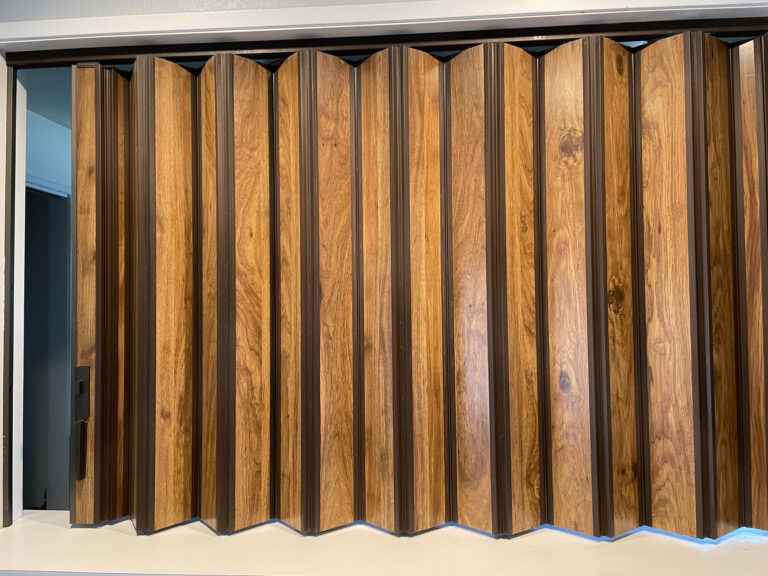
Concertina partitions are often considered a budget-friendly partition solution because they can divide space quickly, take up relatively little room when opened and are usually simpler than more substantial movable wall systems. For some settings, they can be a practical way to create flexible separation without committing to a permanent wall.
However, whether concertina partitions are genuinely cost-effective depends on the space, frequency of use, acoustic expectations, durability requirements and the impression the finished room needs to create. A lower initial price does not always mean better value if the partition struggles to cope with daily use or does not provide enough privacy.
For offices, community venues, schools, clinics and domestic interiors, concertina partitions can work well in the right circumstances. The key is to understand what they are best suited for and where a stronger folding, sliding or movable wall system may be the better long-term investment.
What Are Concertina Partitions?
Concertina partitions are folding room dividers that open and close in an accordion-style movement. Instead of moving as separate flat panels, the partition folds back on itself as it is drawn across the opening. This makes it useful for spaces where a simple, compact division is required.
They are commonly used to separate rooms temporarily, create privacy, section off multi-purpose areas or divide spaces that do not always need to remain enclosed. In some cases, they can be used in offices, halls, meeting rooms, schools, community buildings and homes.
The word “concertina” usually refers to the way the partition folds rather than one single material or specification. Some systems are light-duty and suited to occasional use, while others are more robust and designed for commercial environments. This distinction is important because not every concertina partition will perform in the same way.
Why Are Concertina Partitions Seen as Budget-Friendly?
Concertina partitions are often viewed as budget-friendly because they are generally simpler than full movable wall systems. They may use fewer complex components, require less substantial stacking space and offer a straightforward way to divide a room.
For organisations with limited budgets, this can make them attractive. A community hall, small office, church room, studio or domestic property may need a flexible divider but may not require a high-performance acoustic movable wall. In those cases, a concertina partition could provide enough separation at a lower overall cost.
They can also be budget-friendly because they help make better use of existing space. Instead of renting additional rooms, extending a building or creating permanent internal walls, a concertina partition allows one room to perform more than one function.
For example, a small office could divide a shared workspace from a meeting area. A community venue could separate a refreshment area from an activity space. A home could create a temporary division between living and working areas. In each case, the value comes from improving the usability of space without major structural change.
Are Concertina Partitions Always the Cheapest Option?
Concertina partitions may be a cost-conscious option, but they are not always the cheapest once the full project is considered. The final cost can depend on the size of the opening, material quality, track requirements, installation complexity, finish, acoustic performance and whether any preparation work is needed.
A very basic divider may be inexpensive, but it may not be suitable for a busy commercial or educational environment. A higher-quality concertina system may cost more initially but perform better over time.
It is also important to consider lifecycle cost. If a cheaper partition is used in a demanding environment and needs frequent repairs, adjustment or early replacement, the apparent saving may disappear. In contrast, a more robust system may cost more at the start but offer better reliability and usability across several years.
Budget-friendly should not mean unsuitable. The right question is not simply “Which partition costs the least?” but “Which partition gives the best value for how this space will be used?”
Where Do Concertina Partitions Work Well?
Concertina partitions can work well in spaces where the main need is quick, occasional or moderate separation rather than high acoustic performance or a premium finish. They are particularly useful where flexibility is more important than creating a fully enclosed room.
They may be suitable for:
- Community rooms, village halls and social spaces
- Small offices, training rooms and meeting areas
- Domestic living spaces, home offices and playrooms
- Light-use education or activity areas
- Rooms where privacy is useful but not highly sensitive
- Spaces where the partition will be opened and closed occasionally rather than constantly
A concertina partition can also be useful in buildings where space is limited. Because the folding action allows the system to retract compactly, it can help keep the room open when the divider is not in use.
However, suitability depends on the exact product and installation. A partition that works well in a quiet office may not be right for a busy school hall or high-traffic venue.
How Do Concertina Partitions Compare with Folding Partitions?
Concertina partitions and folding partitions are closely related, but they are not always the same in performance or construction. Concertina partitions usually fold in a continuous, accordion-style action. Folding partitions may use larger hinged panels or more substantial sections that create a firmer division when closed.
A folding partition may offer a stronger appearance, better durability and improved acoustic performance depending on the system. This can make it more suitable for spaces that need regular use, a more professional finish or a more robust room division.
Concertina partitions are often chosen when simplicity and cost are key priorities. Folding partitions are often chosen when the space needs a stronger, more structured solution.
For example, a small community room that only needs occasional separation may suit a concertina system. A school hall that needs to divide daily for lessons, lunch, assemblies and after-school activities may benefit from a more durable folding partition.
The decision should be based on practical use. If the partition will be moved frequently, handled by different staff members or exposed to heavy wear, a stronger folding system may provide better long-term value.
How Do Concertina Partitions Compare with Movable Walls?
Movable walls are typically more substantial than concertina partitions. They often consist of individual panels that move along an overhead track and lock into place to create a more solid division. Depending on the system, movable walls can offer better acoustic performance, a more premium finish and greater flexibility in how panels are stacked or arranged.
Concertina partitions are usually simpler. They may be quicker to operate and more economical, but they may not create the same level of separation as a high-quality movable wall.
In an office, for example, a concertina partition may be enough to screen off a small meeting area. A boardroom or training suite that requires confidential discussions and good acoustic control may be better served by a movable wall.
In a school or community hall, a concertina partition may divide a light-use space effectively. A large multi-purpose hall with simultaneous activities may need a stronger acoustic movable or folding system.
This does not mean concertina partitions are inferior. It means they serve a different purpose. They are best used where expectations are realistic and the system matches the environment.
Do Concertina Partitions Provide Good Sound Insulation?
Sound insulation is one of the main areas where expectations need to be managed. Some concertina partitions can help reduce noise and provide a degree of acoustic separation, but they are not usually the best choice where high sound insulation is required.
If two spaces need to be used at the same time for focused work, lessons, meetings or confidential conversations, acoustic performance becomes more important. In those cases, a higher-performing folding partition or movable wall may be more suitable.
Sound reduction depends on several factors, including the partition material, seals, track, installation quality, ceiling construction and surrounding walls. A partition alone cannot solve every acoustic issue if sound travels through ceiling voids, gaps or adjacent surfaces.
The Department for Education’s Building Bulletin 93 highlights the importance of acoustic design in schools, including performance standards for teaching and learning spaces. While this guidance is specific to schools, it illustrates why sound control should be treated seriously where people need to hear, concentrate or communicate clearly: https://www.gov.uk/government/publications/bb93-acoustic-design-of-schools-performance-standards
For settings where privacy or concentration matters, acoustic requirements should be discussed before choosing a concertina partition.
Are Concertina Partitions Durable Enough for Commercial Use?
Concertina partitions can be suitable for commercial use, but durability depends on the system chosen and how often it will be used. A light-duty product may be fine for occasional use in a small meeting room, but it may not be suitable for daily use in a busy venue.
Commercial spaces often expose partitions to heavier wear than domestic settings. Staff may open and close the partition regularly, furniture may be moved nearby, and visitors may come into contact with the panels. In schools and community buildings, the level of everyday use can be even higher.
A commercially suitable concertina partition should feel stable, operate smoothly and have finishes that can cope with normal wear. The track, handles, seals and folding mechanism should be appropriate for the expected use.
If the partition will be used frequently or is likely to be handled by multiple people, it may be worth considering whether a more robust folding or movable system would be better value.
Are Concertina Partitions Suitable for Homes?
Concertina partitions can be useful in homes where a flexible, space-saving divider is needed. They may help separate a home office from a living area, divide a dining space, create a play area or provide occasional privacy in an open-plan layout.
In domestic interiors, the priorities may be different from commercial settings. Appearance, ease of use and compact storage may matter more than heavy-duty durability. A partition may only be used at certain times of the day, such as during remote working or when guests visit.
For homeowners exploring flexible room division, domestic partition walls can provide useful ideas for adapting internal space without permanently changing the layout.
However, even in a home, quality still matters. A poorly specified divider can feel awkward, flimsy or visually out of place. The partition should suit the room’s style, opening size and daily routine.
Can Concertina Partitions Look Professional?
Yes, concertina partitions can look professional when chosen and installed carefully. Modern systems can be far more refined than older-style temporary dividers. Finishes, colours, panel materials and track details can all affect the final appearance.
That said, concertina partitions may not always create the same premium feel as a glazed partition, wooden system or high-spec movable wall. If the partition will be in a reception area, client-facing meeting room or design-led interior, appearance may carry more weight.
In these cases, it may be worth comparing different systems. Wooden partitions, glazed sections or more substantial folding systems may provide a stronger visual finish while still supporting flexible space division.
A budget-friendly option should still look appropriate for the setting. In a professional environment, the partition becomes part of the room’s presentation, not just a functional divider.
What Are the Main Limitations of Concertina Partitions?
Concertina partitions can be useful, but they are not the right answer for every project. Their limitations usually relate to acoustic performance, durability, appearance and suitability for high-use environments.
The main limitations to consider are that they may not provide strong sound insulation, may not feel as substantial as other systems, may be less suitable for heavy daily use and may offer fewer premium finish options than some alternatives.
They may also be less appropriate for spaces where privacy is critical, such as confidential consultation rooms, boardrooms or clinical environments. In those situations, a more robust acoustic or solid partition system may be better.
Understanding these limitations does not rule out concertina partitions. It helps ensure they are used in the right places.
When Is a Concertina Partition the Right Choice?
A concertina partition is often the right choice when the space needs practical, occasional separation and the project has a defined budget. It is best suited to environments where flexibility is important but high acoustic performance or heavy-duty construction is not the main priority.
It may be a good option for a small office meeting area, a community room, a home office division or a multi-use space with moderate use. It may also suit projects where the aim is to improve space efficiency without major building work.
A concertina partition may be less suitable where the space is used intensively, where sound control is essential or where a premium design finish is needed. In those cases, folding partitions, sliding partitions or movable walls may provide better long-term performance.
What Should You Consider Before Choosing a Budget-Friendly Partition?
Before deciding whether a concertina partition is the right budget-friendly solution, it is worth looking beyond the initial price. The most cost-effective option is the one that performs reliably for the intended use.
Consider how often the partition will be moved, who will operate it, how much sound separation is needed, whether the room is public-facing, how durable the finish needs to be and whether the partition must match existing interiors.
It is also worth thinking about future use. A room may only need occasional separation now, but if the building becomes busier or the space is repurposed, the partition may need to work harder. Choosing a slightly more robust option at the start can sometimes avoid problems later.
Professional advice can help compare the practical differences between concertina, folding, sliding and movable partition systems before a decision is made.
Frequently Asked Questions
Are concertina partitions cheaper than movable walls?
Concertina partitions are often cheaper than more substantial movable wall systems, but the final cost depends on size, finish, specification and installation. The best option should be chosen based on suitability, not price alone.
Can concertina partitions reduce noise?
Concertina partitions can provide some separation and may help reduce general noise, but they are not usually the best choice where high sound insulation is required. Acoustic folding or movable walls may be more suitable for confidential or simultaneous room use.
Are concertina partitions suitable for schools?
Concertina partitions may be suitable for some light-use educational areas, but busy school halls and classrooms often need more robust systems. Durability, safety and acoustic performance should be reviewed carefully before installation.
Final Thoughts
Concertina partitions can be a budget-friendly partition solution when they are used in the right setting. They are practical, space-saving and often more economical than heavier-duty systems. For community rooms, small offices, home interiors and moderate-use spaces, they can offer useful flexibility without major building work.
However, they are not always the best choice for demanding environments. If a space needs strong acoustic performance, frequent daily operation, a premium finish or high durability, a folding, sliding or movable partition system may provide better long-term value.
The most important step is to match the partition to the room’s real use. A good budget-friendly solution should still be practical, reliable and appropriate for the people using the space.
For advice on concertina, folding, sliding and movable partition options, contact A-Door Additions to discuss the most suitable approach for your project.
Phone: 01373 454577
Email: info@a-dooradditions.co.uk
Find out more: https://buildingadditions.co.uk/