Flexible room layouts have become increasingly important in modern commercial design. Businesses, schools, hospitality venues and community spaces are all looking for ways to adapt interiors quickly without relying on permanent structural walls.
Two solutions that are often compared are sliding partitions and openable walls. While both are designed to divide and reconfigure spaces, they operate differently and are typically suited to slightly different environments and operational requirements.
Understanding the differences between these systems can help organisations choose a solution that improves flexibility, privacy and space efficiency while also supporting the day-to-day practical needs of the building.
Although the terms are sometimes used interchangeably, sliding partitions and openable walls are not exactly the same thing.
What are sliding partitions?
Sliding partitions are movable panels that glide horizontally along a track system to divide a room.
The panels are usually operated manually and slide into position to create temporary room separation. When opened, the panels stack neatly to one or both sides of the space.
Sliding partition systems are commonly used in:
- offices
- meeting rooms
- hospitality venues
- restaurants
- educational spaces
- residential open-plan areas
Many sliding systems are designed to provide straightforward and efficient room division while maintaining a clean and modern appearance.
Depending on the design, sliding partitions may include:
- glazed panels
- solid acoustic panels
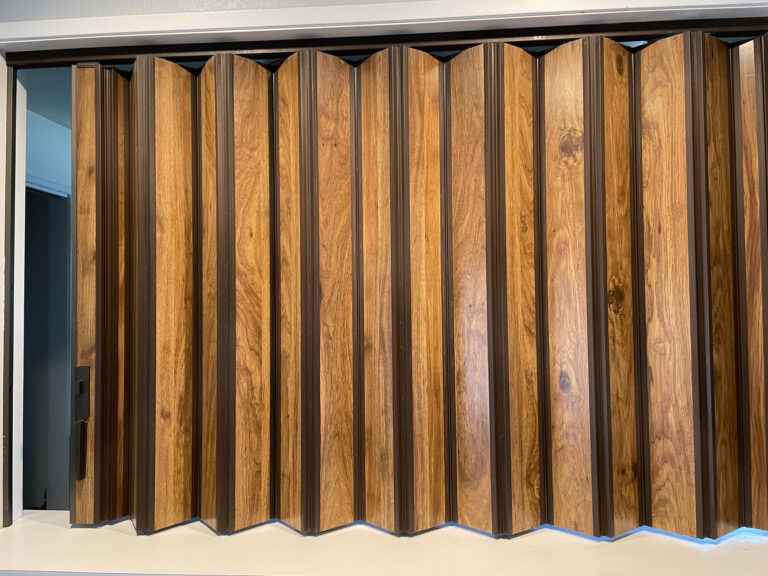
- timber finishes
- framed or frameless systems
Sliding systems are often chosen where businesses need moderate flexibility without heavily altering the overall appearance of the space.
What are openable walls?
Openable walls are larger movable wall systems designed to create highly adaptable spaces.
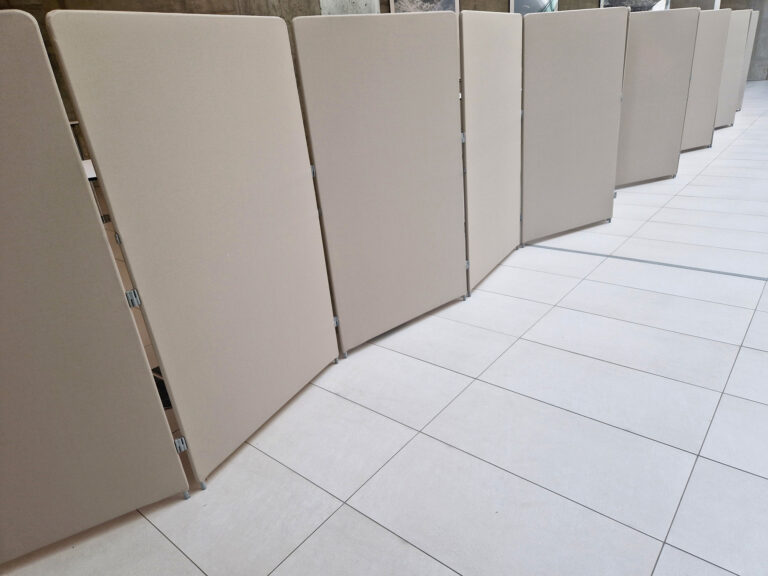
Rather than functioning like simple sliding dividers, openable wall systems are typically made up of multiple independent panels that can be moved, positioned and stacked in different ways.
In many systems, the individual panels travel along overhead tracks and lock together to form a continuous wall when closed.
When opened, the panels can often be stored compactly away from the main space.
Openable walls are frequently used in:
- conference centres
- schools
- community halls
- training facilities
- large meeting spaces
- hospitality venues
These systems are often designed for larger-scale room transformation rather than lightweight division alone.
Because of their construction and sealing systems, openable walls are also commonly associated with stronger acoustic performance.
How do the systems operate differently?
One of the biggest differences between sliding partitions and openable walls is how the panels move and interact.
Sliding partitions
Sliding partitions generally move as connected or sequential panels along a straightforward track layout.
They are often:
- simpler to operate
- suited to smaller or medium spaces
- visually streamlined
- quicker for basic room division
Many sliding systems prioritise convenience and everyday flexibility.
Openable walls
Openable walls usually consist of larger individual panels that can be manoeuvred independently.
This allows for:
- wider room openings
- more flexible stacking arrangements
- larger room transformations
- improved acoustic sealing
- greater adaptability in multi-purpose spaces
Because the panels operate separately, openable wall systems can often support more complex layout changes.
This makes them particularly useful in larger commercial or public environments.
Which option offers greater flexibility?
Both systems improve flexibility compared to permanent walls, but openable walls are generally designed for more substantial spatial transformation.
Sliding partitions work well when:
- spaces only need occasional division
- layouts remain relatively simple
- aesthetics are a key priority
- moderate flexibility is sufficient
Openable walls are often better when:
- large areas require regular reconfiguration
- room sizes change frequently
- spaces host multiple simultaneous activities
- acoustic separation is important
- operational flexibility is a major priority
For example, a hotel conference suite may use openable walls to create several smaller seminar rooms during the day before reopening the entire area for evening events.
An office meeting room, however, may only require a sliding partition to divide collaborative spaces occasionally.
The right solution depends entirely on how the building is used.
How do acoustic performance and privacy compare?
Acoustic performance is often one of the most important factors when choosing between sliding partitions and openable walls.
Sliding partitions
Some sliding systems provide good acoustic separation, particularly when specified with acoustic seals and insulated panels.
However, performance varies significantly depending on the system type.
Sliding partitions are often more focused on flexibility and appearance than achieving the highest acoustic ratings.
Openable walls
Openable wall systems are typically designed with stronger acoustic performance in mind.
Many systems incorporate:
- acoustic seals
- insulated cores
- pressure locking systems
- floor and ceiling sealing mechanisms
This helps reduce sound transfer between divided spaces.
As a result, openable walls are commonly used in:
- schools
- conference venues
- training centres
- meeting facilities
- hospitality environments
where noise control is especially important.
According to British Standards acoustic guidance, acoustic requirements can vary significantly depending on the intended use of a space.
Professional specification advice is therefore important when sound insulation is a priority.
How do the systems compare visually?
Appearance plays an important role in modern interior design, particularly in offices and hospitality settings.
Sliding partitions
Sliding systems are often associated with:
- contemporary office aesthetics
- glazed interiors
- minimalist design
- streamlined layouts
They can integrate very naturally into modern commercial spaces without dominating the visual appearance of the room.
Openable walls
Openable walls tend to prioritise functionality and acoustic performance slightly more heavily, although many modern systems are still visually refined.
They are available in a wide range of finishes, including:
- timber panels
- acoustic fabric finishes
- glazed sections
- contemporary laminate surfaces
Businesses seeking warmer and more design-led interiors may also consider wooden partition systems alongside flexible openable wall solutions.
Which environments benefit most from each option?
Sliding partitions are commonly used in:
- offices
- restaurants
- breakout areas
- collaborative workspaces
- smaller meeting rooms
Openable walls are commonly used in:
- conference centres
- schools
- community halls
- hotels
- training facilities
- large event spaces
Openable walls are generally better suited to environments where spaces need to change dramatically and frequently.
Sliding partitions are often more appropriate where layouts remain relatively stable but occasional division is useful.
What should businesses consider before choosing?
Before selecting between sliding partitions and openable walls, organisations should assess how their space operates on a daily basis.
Important considerations include:
Frequency of layout changes
Will the space be reconfigured regularly?
Acoustic priorities
How important is sound separation?
Available space
Larger systems may require more stacking or storage space.
Ease of operation
Will staff need to move the partitions frequently?
Visual appearance
Should the system blend subtly into the interior or prioritise functionality?
Long-term flexibility
Could future operational needs change significantly?
Professional guidance can help businesses identify the most practical and cost-effective solution.
For organisations exploring flexible commercial layouts, consulting with a partition specialist can help ensure the chosen system suits both operational and design requirements.
Frequently Asked Questions
Are openable walls the same as movable walls?
The terms are often used similarly, although openable walls typically refer to larger acoustic movable wall systems.
Do sliding partitions provide sound insulation?
Some systems do, but acoustic performance varies depending on the specification.
Which system is better for conference venues?
Openable walls are usually better suited to large conference and event environments.
Are sliding partitions easier to operate?
Sliding partitions are often simpler for everyday use in smaller commercial spaces.
Can openable walls be customised?
Yes. Modern systems are available in a wide range of finishes, acoustic ratings and configurations.
If you are considering flexible room division solutions, A-Door Additions can help you explore partition systems tailored to your commercial environment and operational requirements.
Phone: 01935 847289
Email: sales@buildingadditions.co.uk
Find out more: A-Door Additions