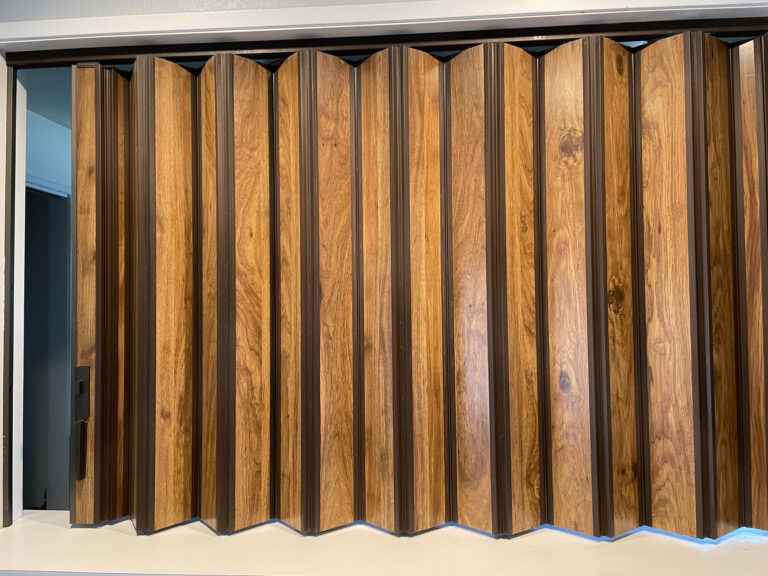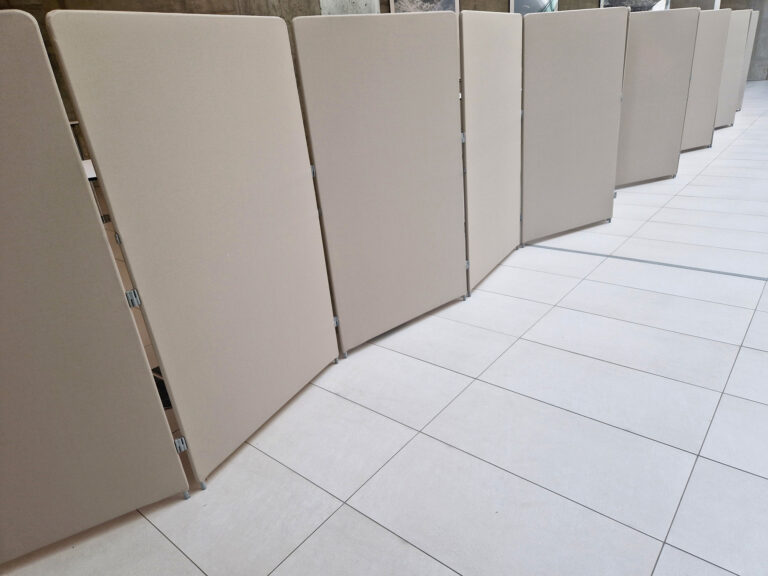
Flexible space design has become increasingly important across commercial, educational and public buildings throughout the UK. Many organisations no longer want rooms to serve only a single purpose. Instead, they need interiors that can adapt quickly to different activities, occupancy levels and operational requirements.
This is one of the key reasons folding partitions have become so widely used.
Folding partition systems allow larger spaces to be divided into smaller areas when needed, then reopened quickly when more open floor space is required. Their ability to create adaptable layouts without permanent construction makes them particularly valuable in buildings where room usage changes regularly throughout the day or week.
From schools and conference venues to community halls and offices, folding partitions are now used across a wide range of sectors where flexibility and efficient space management are priorities.
Why are folding partitions so popular?
The main advantage of folding partitions is their ability to transform spaces quickly and efficiently.
Traditional fixed walls permanently divide a building into separate rooms, which limits flexibility. Folding partitions provide a more adaptable solution by allowing spaces to open or close depending on immediate requirements.
This flexibility helps organisations:
- maximise room usage
- support multiple activities
- improve operational efficiency
- reduce reliance on external venues
- adapt layouts with minimal disruption
Many modern buildings are expected to serve several different functions rather than remaining static throughout the day.
For example, a school hall may host assemblies in the morning, sports activities during the day and community events in the evening. Folding partitions make this possible without requiring multiple dedicated rooms.
Their practicality is one of the reasons folding systems continue to remain widely used across both commercial and public-sector environments.
Why are folding partitions commonly used in schools?
Educational buildings are among the most common environments for folding partition systems.
Schools, colleges and universities often need spaces that can adapt quickly to changing group sizes and activities. Folding partitions allow educational facilities to divide large halls or classrooms into smaller teaching spaces when required.
Common applications include:
School halls
Large assembly halls can be divided for simultaneous activities or smaller group sessions.
Classrooms
Some schools use flexible partitions to create adaptable learning environments that support collaborative teaching approaches.
Sports and activity spaces
Partitions allow sports halls or activity areas to support multiple groups at the same time.
Examinations and events
Temporary room division can help schools manage exams, performances or community events more effectively.
Educational settings often benefit from acoustic folding partitions, which help reduce sound transfer between divided spaces.
According to Department for Education building guidance, acoustic control is an important consideration within learning environments.
Folding systems can help schools create quieter and more functional spaces while maintaining flexibility.
How are folding partitions used in community halls?
Community venues are another common setting for folding partition systems.
Many community halls, churches and social clubs host a wide variety of activities throughout the week, including:
- meetings
- fitness classes
- children’s groups
- performances
- training sessions
- private events
Without flexible room division, it can be difficult for these venues to accommodate multiple users simultaneously.
Folding partitions allow large halls to be split into smaller functional areas, helping venues maximise bookings and make better use of available space.
For example, a community centre may divide its main hall into:
- a meeting room
- an exercise area
- a children’s activity space
all within the same building at the same time.
This adaptability can help community organisations improve both operational flexibility and revenue potential.
Why are folding partitions popular in conference and hospitality venues?
Hotels, conference centres and event venues often rely heavily on flexible layouts.
Different events require different room sizes, and venues need the ability to adapt spaces quickly between bookings.
Folding partitions are commonly used to create:
Flexible conference rooms
Large conference suites can be divided into smaller breakout rooms.
Banqueting spaces
Event layouts can change depending on guest numbers or event type.
Training facilities
Corporate training sessions often require multiple separate spaces.
Private dining areas
Restaurants and hospitality venues may use folding systems to create temporary private spaces.
Because many hospitality environments prioritise both appearance and practicality, folding partitions are available in a wide range of finishes and acoustic specifications.
Modern systems can integrate very effectively into high-end commercial interiors.
Are folding partitions used in offices?
Although sliding and glazed systems are often associated with offices, folding partitions are also widely used in commercial workplaces.
They can be particularly valuable in:
- training rooms
- presentation areas
- collaborative workspaces
- flexible meeting environments
- multi-purpose office areas
As hybrid working continues to influence office design, businesses increasingly need layouts that can support varying occupancy levels and working styles.
Folding partitions help offices adapt more easily without relying on permanent structural changes.
Businesses exploring adaptable workspace layouts may also benefit from flexible partition wall systems that support evolving workplace requirements.
What acoustic benefits do folding partitions provide?
Acoustic performance is often one of the most important reasons organisations choose folding partition systems.
Large open spaces can become noisy and difficult to manage without effective sound separation.
Modern acoustic folding partitions are designed to help reduce sound transfer between divided areas, making them particularly useful in:
- schools
- meeting spaces
- conference facilities
- training environments
- community buildings
The acoustic performance of a partition system depends on factors such as:
- panel construction
- seals
- track systems
- materials used
- installation quality
High-performance systems can significantly improve usability within multi-purpose environments.
How do folding partitions help maximise space efficiency?
Space efficiency has become increasingly important as property costs continue to rise.
Rather than expanding premises or building additional rooms, many organisations prefer to maximise the functionality of their existing space.
Folding partitions support this by allowing one area to serve multiple purposes throughout the day.
For example:
- a conference hall can become several meeting rooms
- a school hall can support multiple classes
- a church space can host simultaneous activities
- a training room can divide into breakout areas
This adaptability allows buildings to operate more efficiently without requiring permanent structural alterations.
What should organisations consider before installation?
Before installing folding partitions, it is important to assess how the space will actually be used.
Key considerations include:
Frequency of use
Will the partitions be moved daily or only occasionally?
Acoustic priorities
How important is sound insulation?
Room size
Larger spaces may require more substantial systems.
Storage space
Folding systems require stacking space when opened.
Ease of operation
Some environments require quick and simple reconfiguration by staff.
Visual appearance
The finish and design should complement the surrounding interior.
Professional advice can help ensure the chosen system balances practicality, durability and visual appeal.
For organisations seeking adaptable interior solutions, consulting with a partition specialist can help identify the most suitable system.
Frequently Asked Questions
Are folding partitions suitable for small spaces?
Yes. Folding systems can work well in smaller environments where flexible room division is important.
Can folding partitions reduce noise?
Acoustic folding systems are specifically designed to improve sound separation between divided spaces.
Are folding partitions difficult to maintain?
Most modern systems are designed for long-term durability and relatively straightforward maintenance.
Do folding partitions require structural alterations?
Installation requirements vary, but folding systems are generally less disruptive than permanent construction.
Can folding partitions be customised?
Yes. Folding partitions are available in a range of finishes, materials and acoustic specifications.
If you are looking to improve the flexibility and functionality of your space, A-Door Additions can help you explore folding partition systems tailored to your building and operational needs.
Phone: 01935 847289
Email: sales@buildingadditions.co.uk
Find out more: A-Door Additions
Find us on BPI