Noise is one of the most common challenges in modern working environments. Open-plan layouts, collaborative areas and shared facilities can all contribute to distractions that reduce concentration and productivity. A Sound Dampening Room Divider provides a practical way to manage noise while maintaining layout flexibility.
Why Noise Control Matters in Offices
Excessive background noise can affect focus, wellbeing and communication. A Sound Dampening Room Divider helps create defined zones within a larger space, reducing sound transfer between departments and meeting areas while improving confidentiality.
In busy workplaces, employees often need different types of environments to perform their best work. Some tasks require collaboration and discussion, while others demand quiet concentration. Without effective acoustic control, these activities can interfere with one another. A Sound Dampening Room Divider helps balance these needs by creating quieter areas for focused work while still allowing open collaboration elsewhere in the office.
Reducing noise also supports employee wellbeing. Persistent background noise can lead to fatigue and stress over time. By improving acoustic conditions, organisations can create a more comfortable and productive working environment.
How a Sound Dampening Room Divider Works
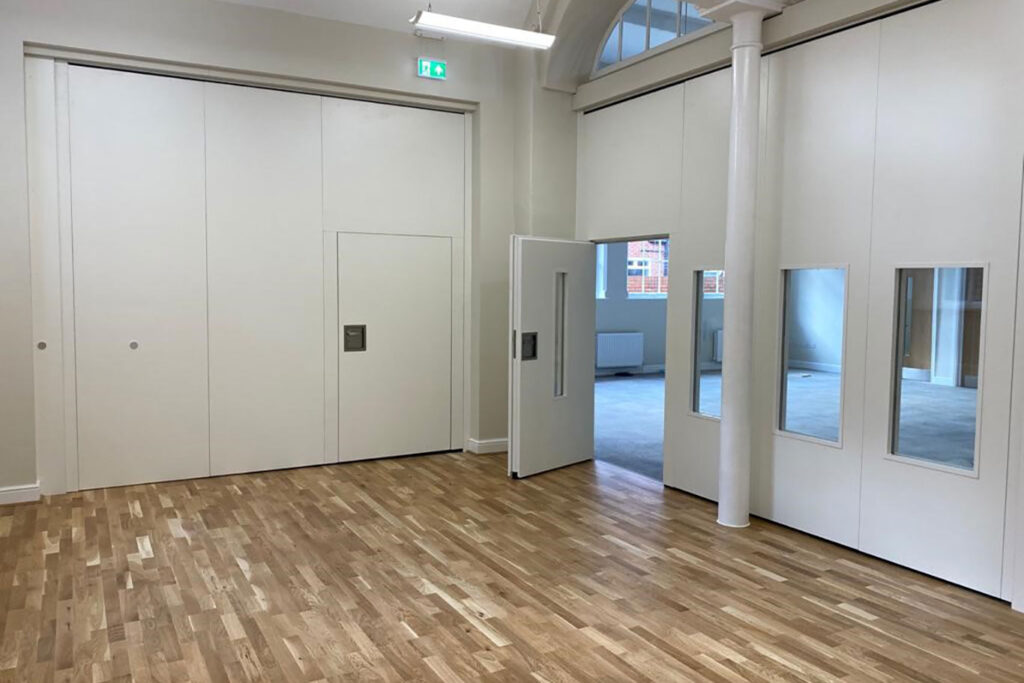
Unlike lightweight screens, a professionally specified Sound Dampening Room Divider is engineered with acoustic cores and sealing mechanisms to limit sound transmission. These systems are designed to absorb and block sound waves, preventing them from travelling easily between spaces.
When installed correctly, these systems can significantly improve acoustic performance by:
-
Reducing echo and reverberation
-
Limiting sound spill between spaces
-
Improving speech privacy
-
Supporting better meeting room performance
Many acoustic divider systems also include specialised seals along panel edges and floor tracks, which help minimise sound leakage. This ensures the divider functions more like a permanent wall in terms of acoustic performance, while still retaining the flexibility of a movable system.
Applications Beyond Offices
A Sound Dampening Room Divider is also suitable for schools, community centres, healthcare facilities and conference venues where acoustic control and flexibility are both important.
In educational environments, these systems can allow multiple lessons or activities to take place within the same hall without significant disruption. Healthcare settings may use acoustic dividers to provide private consultation areas, while conference venues rely on them to separate simultaneous presentations or workshops.
Because the systems are adaptable, they can support a wide range of building types where spaces need to serve multiple functions throughout the day.
Supporting Flexible Layouts
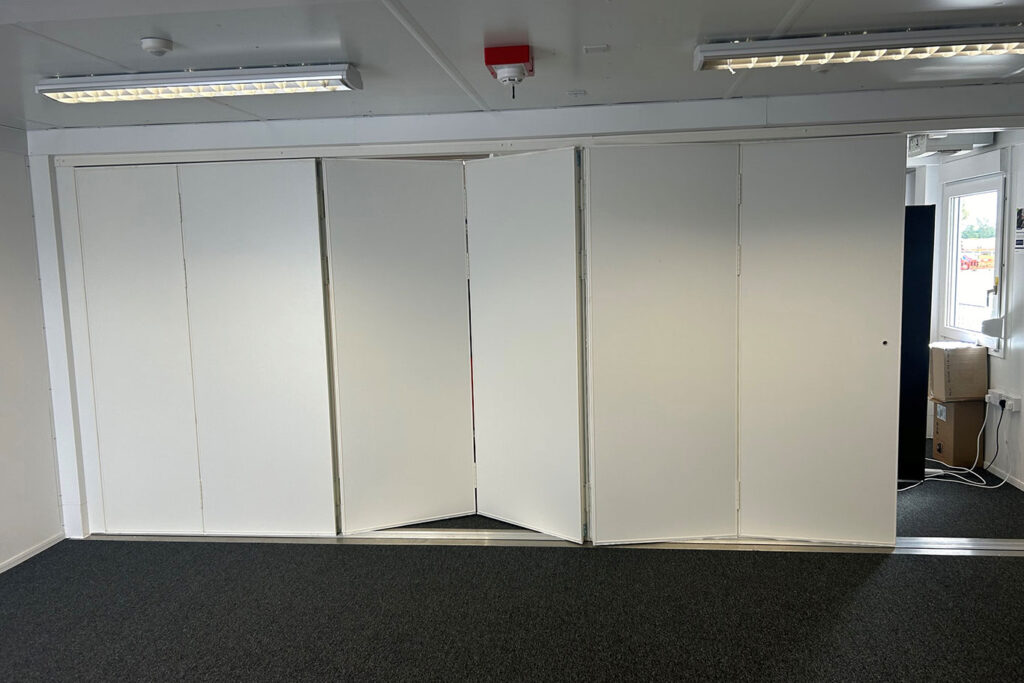
Unlike permanent construction, divider systems allow spaces to be reconfigured as needs change. This enables businesses and organisations to adapt layouts without major building works.
For example, a large office area can be divided into smaller meeting rooms during busy periods and then reopened for collaborative working when required. This flexibility helps organisations maximise the value of their existing floor space while keeping future layout options open.
Key Considerations Before Installation
Before selecting a system, consider:
-
Required level of acoustic reduction
-
Opening size and ceiling structure
-
Frequency of daily use
-
Integration with the existing interior design
It is also worth considering how the divider will be operated and stored when not in use. Some systems are designed to stack neatly within wall pockets or dedicated storage areas, ensuring they do not interfere with day-to-day operations.
Sound Dampening Room Divider vs Standard Screens
Portable screens may provide visual separation, but they offer minimal acoustic benefit. A Sound Dampening Room Divider is purpose-built to manage sound transfer, making it a stronger long-term solution.
Standard screens typically lack the materials and sealing required to significantly reduce sound travel. In contrast, professionally designed acoustic dividers incorporate specialised cores and engineering to achieve measurable sound reduction performance.
Conclusion
A Sound Dampening Room Divider is a practical investment for organisations seeking improved acoustic control without sacrificing flexibility. By creating quieter, more functional spaces, these systems help businesses and public venues maintain productivity, privacy and comfort while adapting their layouts to changing needs.
For expert advice and a tailored solution for your premises, contact A-Door Additions today.
For expert advice and installation of concertina hall partitions, contact A‑Door Additions today.
Phone: 01373 454577
Email: info@a-dooradditions.co.uk
Frequently Asked Questions
Q1: Can it make a room completely silent?
A1: No internal partition can make a space entirely silent, but high-quality systems significantly reduce sound transmission and improve acoustic comfort.
Q2: Are these suitable for schools?
A2: Yes. Many education facilities use Sound Dampening Room Divider systems to separate activity areas from quieter teaching spaces.
Q3: Do they require major building work?
A3: Installation is typically far less disruptive than traditional construction when professionally specified and fitted.